
Reflections on the Batseta Winter Conference 2026: The Power of One Degree

"In pensions, one-degree matters."

A one-degree adjustment may seem insignificant in the moment, but over time it can fundamentally alter a destination. The same is true in the retirement fund industry. A small improvement in governance, preservation, investment strategy, member communication or financial literacy today can significantly improve retirement outcomes tomorrow.
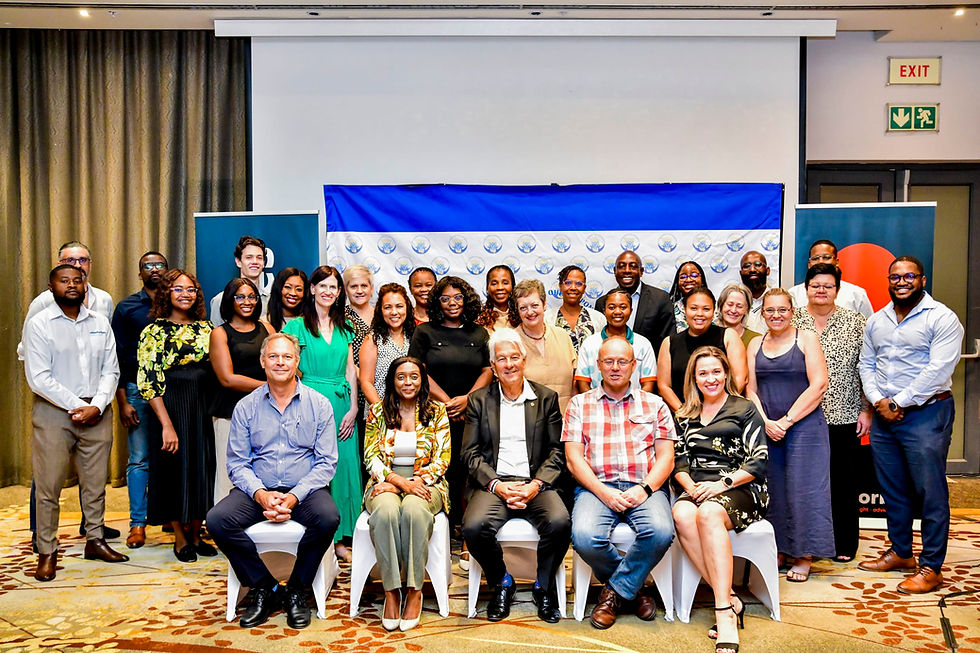
It was against this backdrop that retirement fund leaders from across Africa gathered at Sun City, South Africa, in June 2026 for the Batseta Winter Conference under the theme "C°Africa – The Power of One Degree." The conference brought together trustees, principal officers, regulators, policymakers, asset managers, consultants, administrators and pension industry associations from across the continent to explore how African pension capital can be harnessed to support economic development while improving retirement outcomes for members.
As representatives of the Retirement Fund Institute of Namibia (RFIN), we were privileged to participate in these discussions and to contribute to important conversations on the future of retirement fund governance and investment in Africa.
Pension Capital and Africa's Development Agenda
One of the most significant themes running throughout the conference was the growing recognition that pension capital can play a more active role in addressing Africa's development challenges. Day One was particularly focused on infrastructure investment, economic transformation and nation-building. South Africa's Minister of Finance, the Honourable Enoch Godongwana, set the tone with a keynote address on harnessing pension capital for nation-building and continental transformation. Discussions highlighted South Africa's infrastructure backlog, including challenges relating to water security, energy supply and transport infrastructure, and explored how institutional capital can assist in financing long-term development projects.
For Namibian delegates, the message was particularly relevant. Namibia faces many of the same developmental challenges. The question is no longer whether retirement funds should consider infrastructure as an asset class, but rather how trustees can prudently participate in opportunities that deliver both developmental impact and appropriate risk-adjusted returns for members.
Numerous sessions examined infrastructure from different perspectives, including diversification, resilience, private equity and local economic development. What emerged was a growing consensus that retirement funds are uniquely positioned to provide patient capital capable of supporting long-term projects while still fulfilling their fiduciary obligations to members. The challenge is not simply finding opportunities, but ensuring that governance, due diligence and investment discipline remain at the centre of decision-making.
From Portfolios to Outcomes: Putting Members at the Centre
A particularly thought-provoking session was delivered by Nazlie Seegers of Salt Employee Benefits on "From Allocations to Outcomes: Embedding Member Experience into Investment Decision Making in African Pension Funds."
The session challenged traditional approaches to pension fund governance. Historically, trustees have focused heavily on returns, benchmarks, compliance and asset allocation. However, the presentation argued that retirement outcomes are not determined by investment performance alone. Member behaviour, understanding, trust and preservation decisions play an equally important role.
One observation resonated strongly: pension funds boards often monitor market, credit, and liquidity risks, yet pay insufficient attention to behavioural risk. Panic switching, early withdrawals, poor preservation rates and lack of member understanding can undermine even the best investment strategy.
The presentation's central message was that trustees do not merely govern portfolios; they govern member retirement outcomes. That distinction is important. As Namibia continues implementing reforms under FIMA, trustees and principal officers may increasingly need to consider not only how investments perform, but whether members understand, trust and ultimately benefit from the decisions being made on their behalf.
The presentation further highlighted that there is a unique language gap between members and industry. Communication, financial literacy and member engagement are not peripheral issues. They are fundamental governance considerations. Boards focus on governance, investment allocation and performance, but members are more concerned with practical issues: whether their money is safe, whether it is growing and whether it will be available when they need it. Administrators can play a key role in linking pension funds to their members, providing insight into how members feel, react and respond. The real shift in pension governance is not about achieving better investment outcomes alone. It is about making decisions that reflect member behaviour, are clearly communicated, and build confidence and trust among those whose savings are being managed.
A member who understands the long-term purpose of an investment strategy is more likely to preserve retirement savings, remain invested during periods of volatility and make decisions that support better retirement outcomes. This is a lesson that resonates strongly within the Namibian context.
Collaboration Beyond Borders
A particularly significant milestone was the launch of the Asset Owners Forum for Infrastructure Exchange (AFIX). AFIX seeks to create a Pan-African platform through which pension funds and other asset owners can share knowledge, build capacity and collaborate on infrastructure investment opportunities across the continent. The initiative is supported by key stakeholders including the Asset Owners Forum South Africa, the African Development Bank, Standard Bank and MiDA Advisors.
The significance of AFIX extends beyond infrastructure. It reflects a growing recognition that African pension funds face many common challenges and that greater collaboration can unlock opportunities that individual countries may struggle to access alone. For Namibia, AFIX presents an opportunity to participate in broader regional conversations around infrastructure, due diligence, governance and investment capacity building.
RFIN Director, Sabrina Jacobs, participated as a panellist during the session titled "Pan-Africa Collaboration in Action: Insights from Cross-Border Leaders." The discussion brought together representatives from Namibia, Ghana, Lesotho and Benin to examine how institutional investors can work together to shape and transform Africa’s development future across borders.
The discussion reinforced an important reality: collaboration is no longer optional. Whether the focus is governance, infrastructure investment, member education, regulatory reform or capacity development, African retirement fund industries can achieve more by sharing experiences and learning from one another. The launch of AFIX and the growing cooperation between organisations such as Batseta and RFIN demonstrate that meaningful regional collaboration is already taking shape.
Perhaps the greatest value of conferences such as Batseta lies not only in the formal presentations but also in the relationships that are built. Trustees, principal officers and industry leaders from different jurisdictions face remarkably similar challenges. By sharing experiences, successes and lessons learned, we strengthen our collective ability to serve retirement fund members across Africa.
As Namibian delegates, we returned with several key takeaways. First, pension capital has an important role to play in supporting national development, provided investments remain consistent with trustees' fiduciary obligations. Second, member outcomes must remain at the centre of governance discussions. Third, infrastructure investment requires strong governance, robust due diligence and collaborative approaches. Finally, the future of Africa's retirement fund industry will increasingly be shaped by cross-border cooperation and knowledge sharing.
If there was one overarching lesson from the conference, it is that meaningful change does not always require dramatic shifts. Sometimes, as the conference theme reminded us, all it takes is one degree. A single degree may look minor, but in many systems it sits right at a tipping point; where small changes create significant impact.
Sabrina Jacobs & Vincent Shimutwikeni
Retirement Fund Institute of Namibia (RFIN)

Comments